Is Glean's Knowledge Graph a Real Moat Against Anthropic and OpenAI?
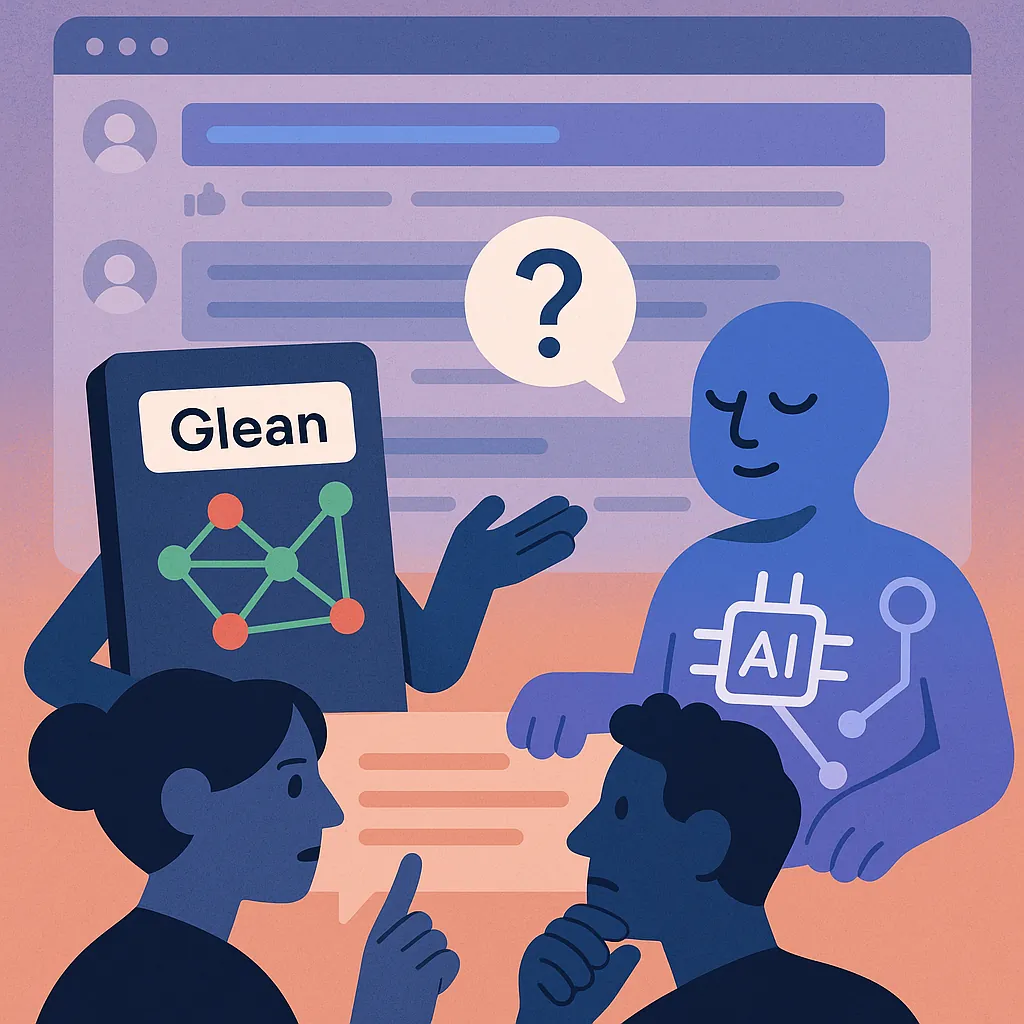
As enterprise AI search heats up, questions arise about Glean's competitive edge amid push from Anthropic and OpenAI. The central debate focuses on whether Glean's knowledge graph across enterprise systems truly offers superior search capabilities compared to AI models like Claude Code with connectors. Some users report preferring Claude Code's results over Glean's, casting doubt on Glean's advantage. Industry insiders suggest Glean's moat is rapidly shrinking due to advances in AI models that diminish the importance of data connectors and knowledge graphs. The future of enterprise AI search may hinge less on data integration and more on model intelligence and actionable capabilities.

Commenters display a divided stance: some emphasize Glean's once strong but now rapidly diminishing moat based on its knowledge graph and read-only connectors, while others dismiss Glean as uncompetitive or even 'mid' compared to emerging AI tools like Claude and Gemini. Supporters laud Glean’s optimized retrieval-augmented generation (RAG), but many believe Anthropic and OpenAI's enterprise push threatens its relevance. User experiences also vary, illustrating a split between loyalty to Glean and shifting preferences towards smarter AI search alternatives.
This discussion reflects broader challenges in the workplace tech landscape, including how companies leverage AI for knowledge management and search efficiency. As AI models evolve rapidly, enterprises face decisions about investing in integrated platforms versus adopting newer, smarter AI services. The competitive pressures also highlight implications for tech hiring, as firms seek talent adept at building or utilizing advanced enterprise AI. Economic factors play a role too, with startups like Glean navigating sustainability amid intense competition from well-funded AI incumbents.
// The Desk Poll
Is Glean's knowledge graph a real competitive advantage?
Reactions
// Read Next

Anthropic IPO Valuation 2024 Sparks Debate on AI Investment Potential
Oct 4
// From Another Desk