How Many Months Should Your Emergency Fund Cover After Layoffs?
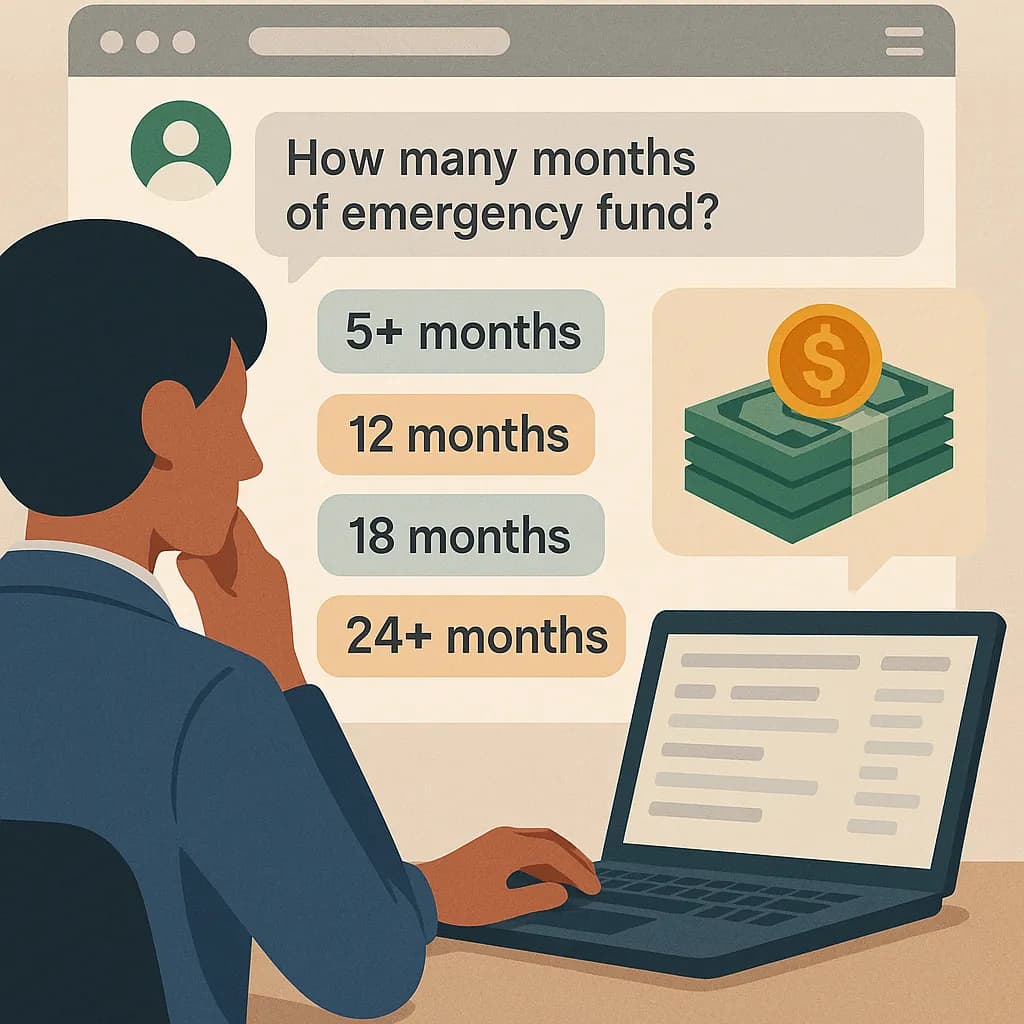
In light of recent widespread layoffs, many professionals are reconsidering their financial safety nets. The question arises: how many months of emergency fund should one ideally have? Responses vary widely, with suggestions ranging from 5 to over 24 months, reflecting diverse personal circumstances and risk tolerance. Some prioritize liquid assets over retirement contributions to maintain flexibility, while others emphasize maximizing employer-sponsored benefits for long-term security. The debate extends to whether emergency funds should account for additional costs like health insurance during unemployment. Overall, the discussion underscores the complex balance between job security fears and financial planning strategies during economic downturns.

The community shows a divide between those who have substantially increased their emergency funds, some up to two years of expenses, and others still grappling with depleted savings or relying on credit cards as backups. Several commenters highlight the trade-offs between liquidity and retirement savings, with some advocating reducing 401k contributions temporarily. Concerns about the rising costs of health insurance during layoffs and the impact on emergency fund calculations also emerge. Sentiment ranges from cautious preparedness to financial strain and uncertainty about the future job market.
This conversation links to broader issues of economic instability, especially within the tech sector where layoffs have been prominent. It touches on financial planning strategies during uncertain times, employer policies around benefits and retirement plans, and the psychological impact of job insecurity. Additionally, the discussion reflects on how shifts in the labor market influence individual saving behaviors and highlight the importance of adaptable financial resources amid volatile employment landscapes.
// The Desk Poll
How many months should your emergency fund cover after layoffs?
Reactions
// From Another Desk
Is Pinterest the Biggest Tech Company in Decline Amid AI Disruption?
Explore why Pinterest and other tech giants face decline as AI disrupts jobs and culture, impacting employee appeal and industry dynamics.