OpenAI Proposes 5% Government Stake: New Frontier in AI Regulation?
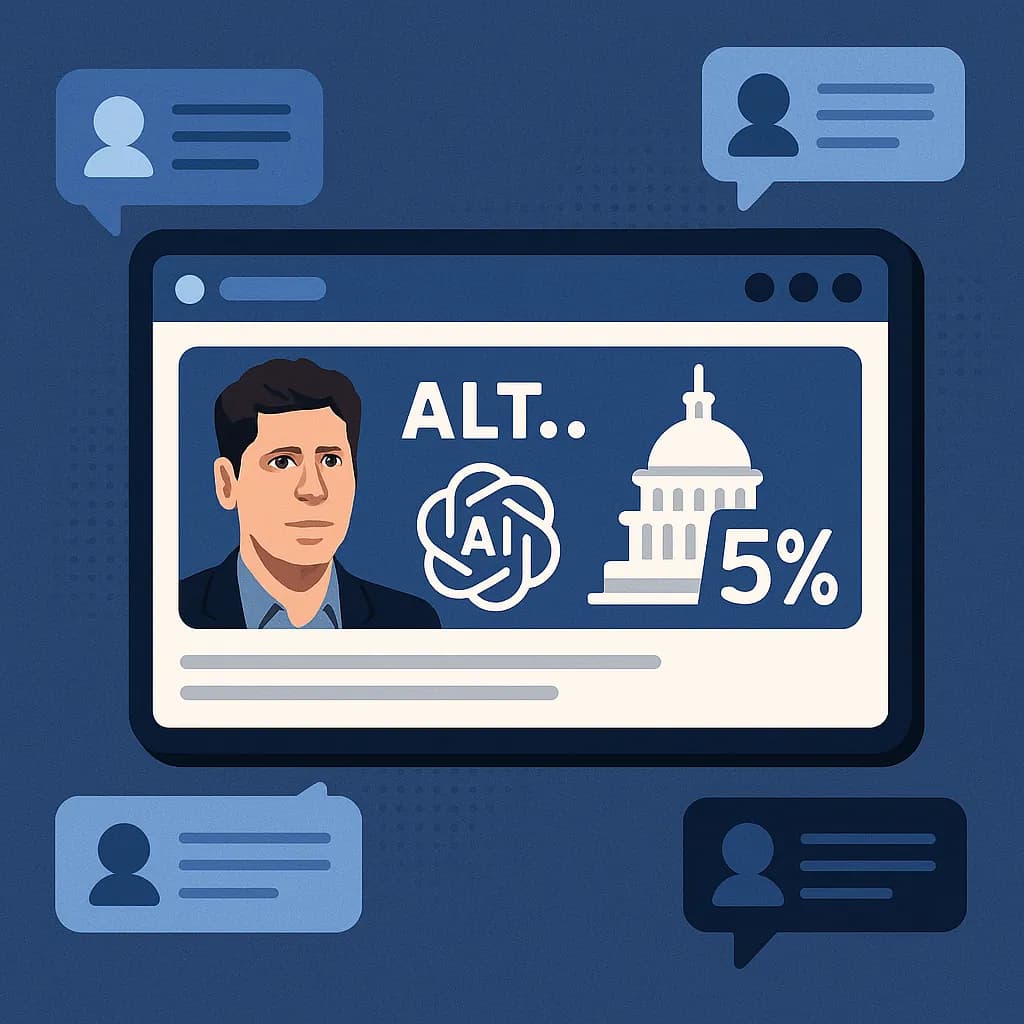
OpenAI CEO Sam Altman has proposed granting the US government a 5% equity stake in the AI company, based on an $852 billion valuation. This move aims to foster public ownership of AI's wealth and could set a precedent for other tech giants like Google, Meta, and Anthropic to follow suit. The proposal highlights evolving dynamics in AI regulation and tech policy, raising questions about government involvement in innovation and market competition. Valued at approximately $42.6 billion, the stake could significantly shift funding and control within the AI industry. The idea has sparked debates on whether government ownership would accelerate or hinder technological progress.

Comments reveal a divided sentiment: some view the proposal skeptically, fearing it signals a government bailout or regulatory capture, while others suggest it could redefine corporate-government relations. Concerns about corruption, fairness, and the impact on innovation feature prominently, with a few commenters advocating for broader government equity in corporations as a tax alternative. The discourse reflects tensions over trust in tech leadership and government motives amid rapid AI advancements.

This proposal touches on broader issues in tech policy and workplace dynamics, including corporate governance, regulatory transparency, and the influence of government stakes on industry innovation. It also intersects with economic debates about tax structures, public ownership, and the role of government in shaping emerging technologies and their labor markets. The discussion echoes wider concerns about ethical management and accountability in fast-evolving tech sectors.
// The Desk Poll
Should the government own AI stakes?
Reactions

// From Another Desk