Apple vs Snap Compensation Comparison: Security Engineer Pay Breakdown
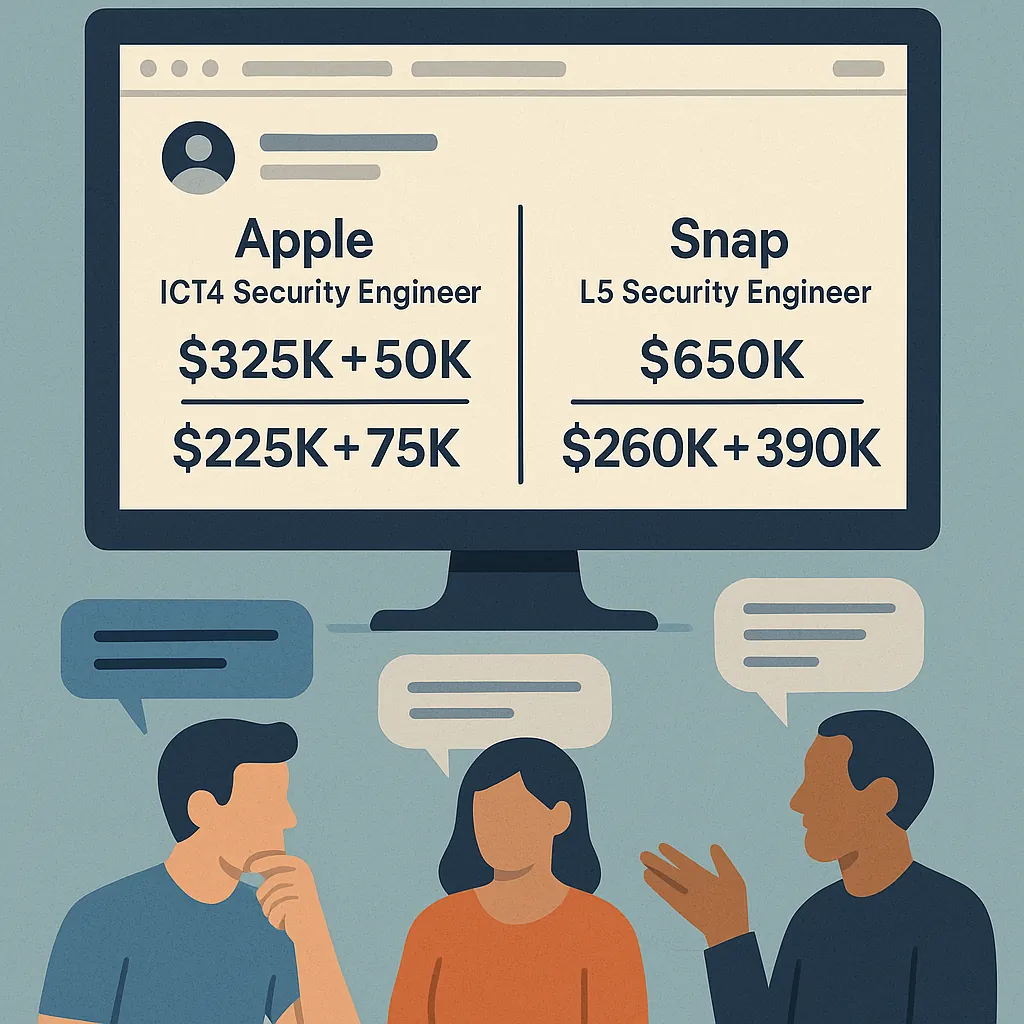
A recent Blind post sparked debate over compensation differences between Apple and Snap for security engineers. The post compared offers: Apple ICT4 Security Engineer in NYC with a total compensation (TC) of $325K plus $50K signing bonus, versus Snap's L5 Security Engineer in Washington with a TC of $650K. Key components include Apple's $225K base and $75K RSU over four years versus Snap's $260K base and $390K RSU over 1.5 million grant over four years. Commenters debated the merits of higher Snap pay amid company volatility and potential layoffs, against Apple's reputed stability and laid-back work culture. The discussion highlights complex trade-offs between tech salaries, stock compensation risks, and work environment preferences. It also reveals concerns about market valuations and hiring freezes affecting job security.

The comments reflect a divided sentiment: some see Snap's higher compensation as a no-brainer despite company volatility and stock losses, while others stress Apple's stability and preferred work culture. Skepticism arose regarding the authenticity of Snap's pay details, with some alleging misinformation. Concerns about layoffs, stock performance, and job security at Snap contrast with perceptions of Apple's sustainable business model. Overall, commenters grappled with balancing financial upside against potential risks and work environment quality.

This post and its discussion relate to broader issues of tech salaries competition amid economic uncertainty, stock-based compensation volatility, and talent retention strategies. It highlights how businesses navigate hiring freezes and layoffs while competing for skilled security engineers. The debate also touches on geographic cost-of-living differences influencing salary choices, and the growing impact of AI initiatives on workforce planning. Furthermore, it reflects employee concerns over sustainable compensation structures and career growth within tech giants versus rapidly evolving startups.
// The Desk Poll
Which matters more in tech jobs?
Reactions